
A trailer chassis is the structural framework that forms the foundation of a semi-trailer. It supports the cargo load, connects the axle and suspension systems, and ensures long-term stability and safety during transportation. Because the chassis bears intense stress and weight, precise engineering, fabrication, and material quality are essential for durability and performance.
At AM Industries Vietnam, we specialize in custom trailer chassis manufacturing – producing robust, high-precision steel trailers trusted by industrial and transport clients across Australia, Europe, and Asia.
What Is A Trailer Chassis?
A trailer chassis is often called the “skeleton” of a trailer because every major component depends on it for structure and alignment. It serves as the mounting base for:
- Cross members – provide lateral strength
- Longitudinal beams – carry the main load
- Axle and suspension mounting points – ensure stability and ride balance
- Coupling or kingpin connection- enable connection to the truck
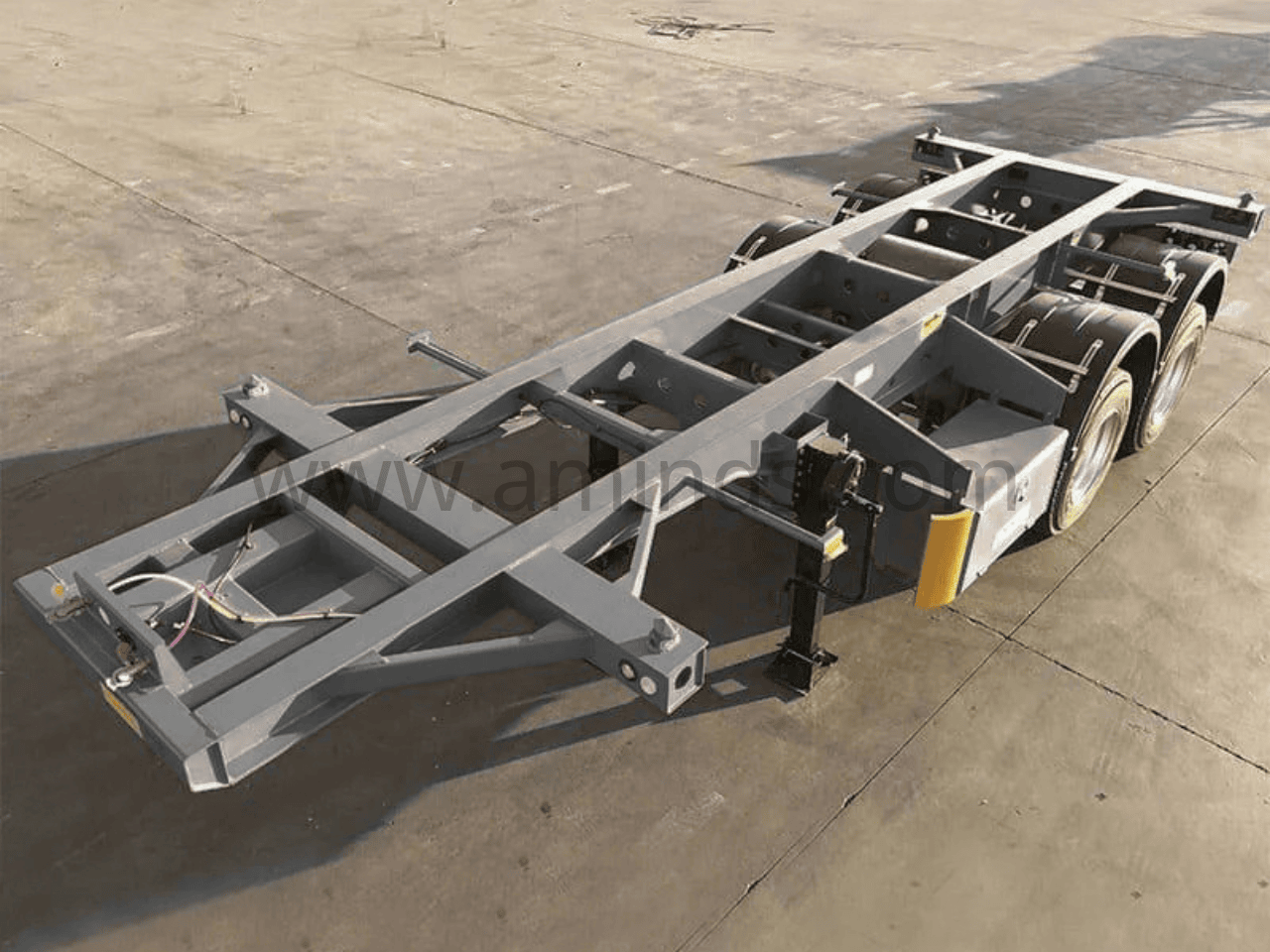
Modern chassis design focuses on strength-to-weight optimization—reducing fuel consumption without compromising safety. High-tensile steel, precision cutting, and automated welding processes are used to deliver rigid yet lightweight frames that perform well under vibration, heavy loads, and harsh environments.
Common Types of Trailer Chassis
The right chassis design depends on your logistics and cargo type. AM Industries Vietnam fabricates several chassis models, including:
- Skeletal Chassis: Designed for intermodal container transportation (20ft, 40ft, or 45ft).
- Flatbed Chassis: A flexible platform for timber, steel coils, construction materials, or oversized machinery.
- Lowboy/Low-bed Chassis: Engineered with a lower center of gravity to safely carry heavy equipment and industrial vehicles.
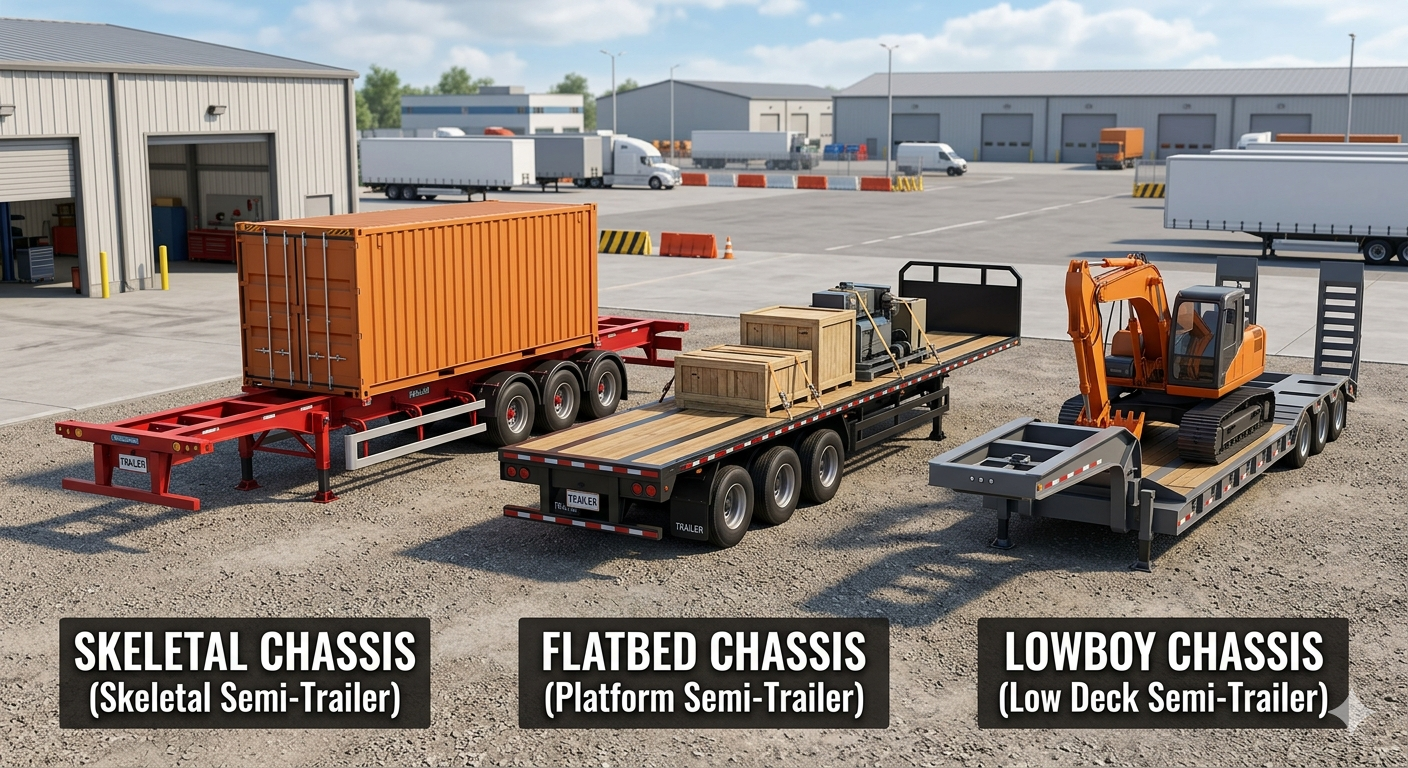
Each chassis type is custom-engineered to meet international standards and specific project requirements.
What are the Materials Used for Trailer Chassis
Most trailer chassis are manufactured from high-strength structural steel like black steel G250, Q345B or S355JR with high quality standards, due to its exceptional:
- Load-bearing capacity and resistance to fatigue
- Vibration absorption for long-haul travel
- Weldability for custom or complex configurations
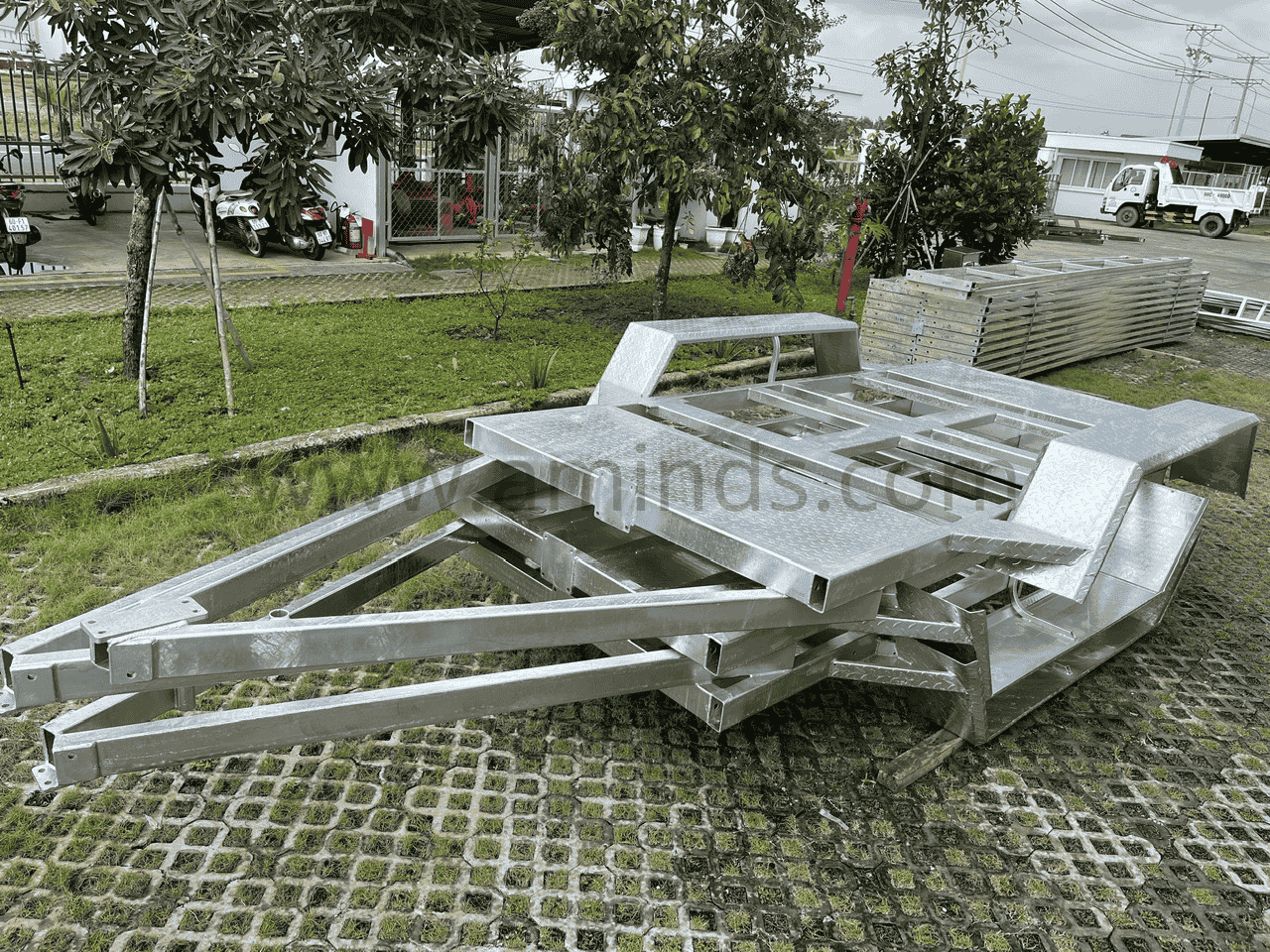
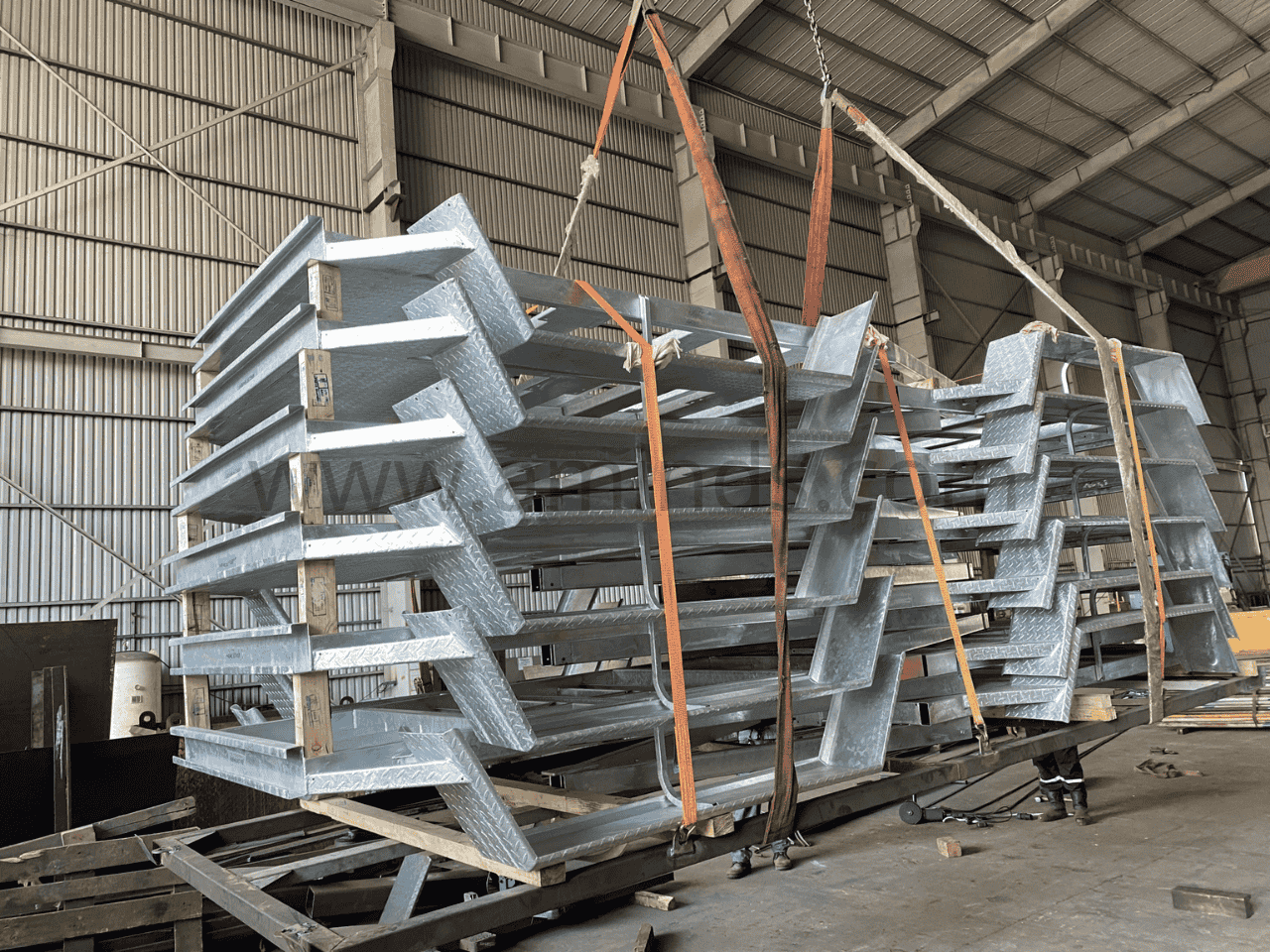
To protect against corrosion, salt, and moisture exposure, surface coatings such as hot-dip galvanizing or industrial-grade epoxy paint are applied—crucial for trailers operating in coastal or high-humidity regions like Australia or Northern Europe.
The Manufacturing Process
At AM Industries Vietnam, trailer chassis fabrication follows a controlled, ISO 9001:2015–certified workflow to guarantee accuracy, safety, and consistency at every stage:
- Engineering & Design Review: Validate structural strength, payload capacity, and compliance with standards.
- Steel Cutting & Forming: Laser or plasma cutting and CNC forming prepare the critical load-bearing members.
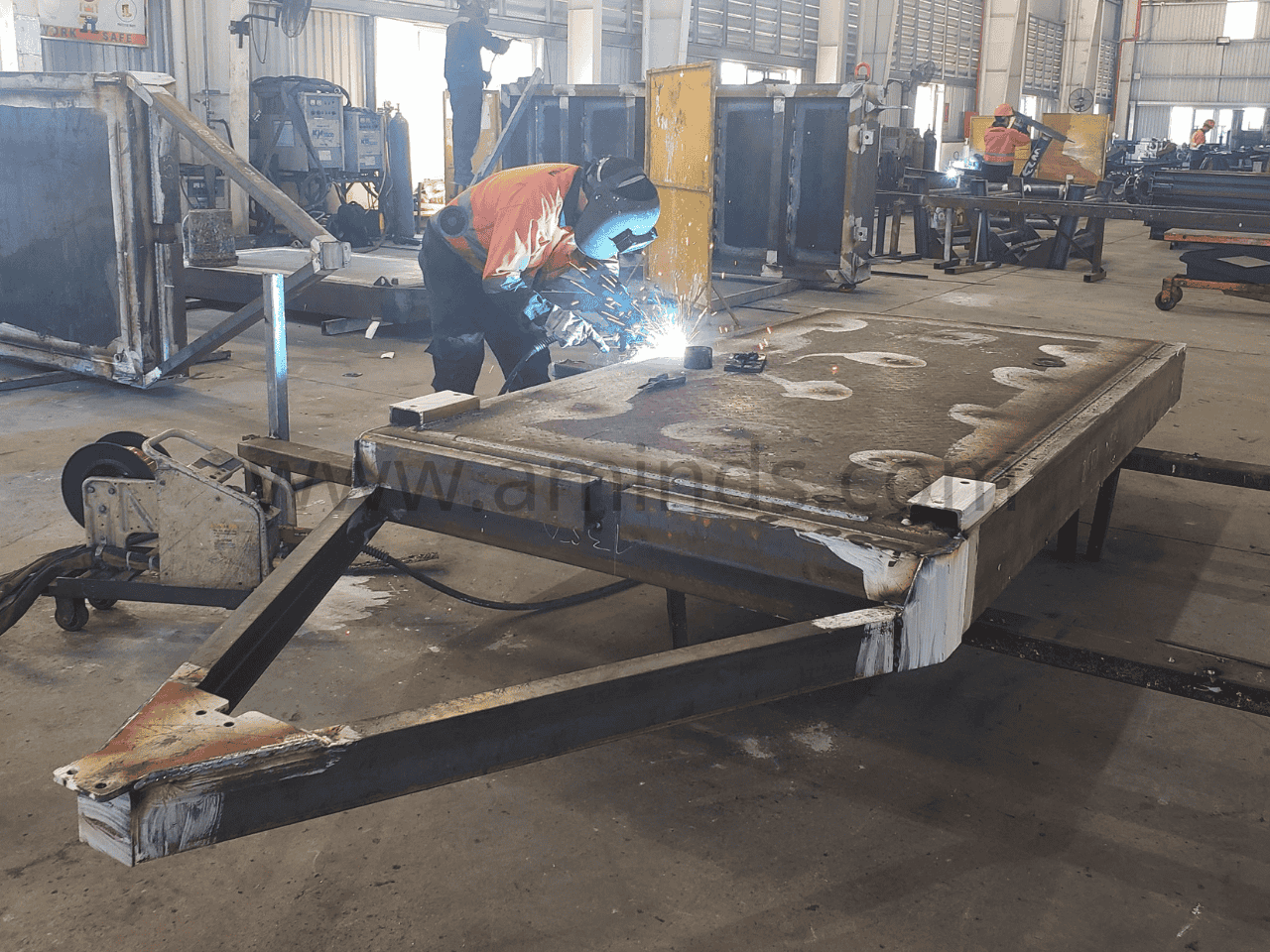
- Welding & Frame Assembly: Certified welders construct and align the chassis using jigs for perfect geometry.
- Surface Treatment: Sandblasting and protective coating ensure lasting corrosion resistance.
- Quality Inspection & Testing: Every chassis undergoes load evaluation, dimensional checks, and final visual inspection.
This systematic process ensures each product meets the technical specifications and operational expectations of global transport clients.
Why Quality Matters in Trailer Chassis Manufacturing
The chassis quality determines the performance, safety, and lifespan of every trailer. Poor fabrication can cause frame distortion, cracking, or premature fatigue—leading to downtime and costly repairs.
A professional manufacturer ensures:
- Accurate cutting and dimensional control
- Qualified welding standards (AWS, EN)
- Strict jig alignment and geometry inspection
- Corrosion-resistant finishing and coatings
These measures extend the chassis’s life cycle, reduce maintenance frequency, and guarantee reliable performance on Australian highways or European logistics routes.
Trailer Chassis Manufacturing at AM Industries Vietnam
As a specialist in OEM and ODM steel fabrication, AM Industries Vietnam delivers reliable, customized solutions for the transport, logistics, and construction sectors.
What sets us apart:
- ISO 9001:2015 certified manufacturing system
- Global export experience serving clients in Australia, Europe, and Asia
- In-house design and engineering support for custom builds
- Comprehensive quality control from raw steel to final inspection
Each trailer chassis produced by AM Industries Vietnam combines strength, precision, and long-term performance, ensuring your equipment operates safely in demanding conditions.
When sourcing a trailer chassis, look for a partner with a proven track record in OEM/ODM manufacturing. A manufacturer that follows ISO 9001:2015 standards and has experience in international exports will ensure your fleet stays on the road longer with minimal maintenance.
Looking for a Trusted Trailer Chassis Manufacturer?
AM Industries Vietnam is ready to support your next trailer fabrication or fleet expansion project.
Contact us today to discuss your technical requirements and discover how our engineering expertise and international fabrication capacity can deliver durable, cost-effective trailer chassis for your business
Frequently Asked Questions (FAQs)
1. What is the best steel for trailer chassis manufacturing?
High-tensile steels such as Q345B or S355 are ideal. They offer superior strength, weldability, and fatigue resistance—essential for heavy-duty and long-haul applications.
2. How long does a steel trailer chassis last?
A professionally manufactured and coated chassis can last 15–20 years, depending on maintenance and operating conditions.
3. Why is hot-dip galvanizing better than paint for chassis protection?
Hot-dip galvanizing forms a metallurgical bond with steel, offering full 360° protection inside and out. Paint only coats the surface and may chip or degrade over time, especially in humid or coastal climates.
